Does Photo Show Adolf Hitler Inspecting Model Of Never-built Triumphal Arch Planned For Berlin
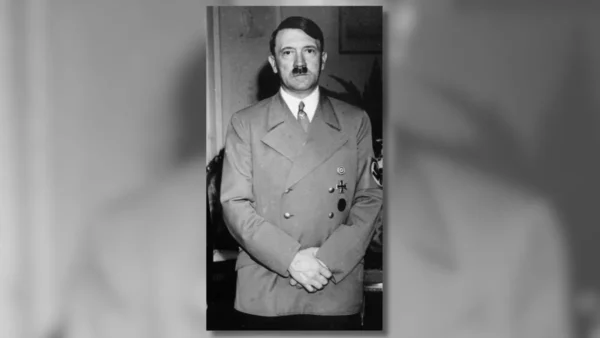
In September 2026, a black-and-white photo spread widely purportedly showing Adolf Hitler and other Nazi Party officials inspecting a model of a triumphal arch they hoped to build in Berlin.
The claim: A black-and-white photo authentically depicts Adolf Hitler and other Nazi Party leaders inspecting a model of a triumphal arch planned for Berlin.
Beneath one Reddit post, commenters compared the arch, which was never constructed, to U.S. President Donald Trump’s plan to construct a massive triumphal arch of his own in Washington, D.C., just outside the grounds of Arlington National Cemetery.
Many readers want us to determine whether the picture is real.
Hitler and other top Nazis inspect a scale model of a planned Triumphal Arch in Berlin, circa 1939.
by
u/Tranesblues in
pics
In short, the photograph is authentic.
Among the many unfinished projects of Nazi Germany was a plan to redevelop the capital, Berlin, and rename it “Germania.” Nazi Party chief architect Albert Speer was put in charge of the design and built a model of the planned city.
Among the buildings was a massive, triumphal arch. The black-and-white photo authentically shows Hitler inspecting the model, presumably designed by Speer.
A reverse image search revealed the picture is on stock image website Alamy, which credits the photograph to the archives of the German newspaper Süddeutsche Zeitung.
Though the “Date taken” information reads Jan. 1, 1939, Alamy also says the picture is “undated.” Berlin is noted as the location. The “More information” caption reads:
Adolf Hitler inspects a modell of a planned triumphal arch. Adolf Hitler and other party functionaries inspect the modell of the triumphal arch, which was planned to be built after the end of the war in Berlin. Undated picture. Date created: 01/01/1939-31/12/1945
We want to learn more about the photo’s history so we contacted Süddeutsche Zeitung. A spokesperson for the paper said in a statement that it licenses images from its historical archives through Alamy. Therefore, the picture came from the archives of a reputable news publication.
Running the photograph through several tools that detect content generated using artificial intelligence software uncovered no signs that it was AI-generated.
A history of triumphal arches
Historians trace the history of triumphal arches back to ancient Rome. During the Roman Republic, the “triumph” was an extravagant parade the Roman Senate granted to a Roman general (and his army) following a particularly remarkable conquest. Three triumphal arches were built during this period, according to Britannica, but none survive.
During the imperial period, however, Roman emperors frequently declared triumphs for themselves (regardless of their military accomplishments), often building arches as a commemoration. There are three — the Arches of Titus, Septimus Severus and Constantine — still standing in Rome.
The Arc de Triomphe in Paris, built to commemorate the conquests of Napoleon Bonaparte, is one of many arches still extant around the world that pay architectural homage to the Roman triumphal arch. They are built for many reasons — New York City’s Washington Square Arch commemorated 100 years since George Washington’s inauguration, for instance, while New Delhi’s India Gate is a war memorial.
Trump first mentioned the idea of a triumphal arch in Washington, D.C., in October 2025. When CBS News asked who the arch was for, Trump pointed at himself and said “me.” The arch — which has been the subject of multiple lawsuits claiming its construction was not approved in the proper manner or could pose risks to aviation safety and emergency services — would stand 250 feet tall, commemorating the 250th anniversary of the United States.
The Nazis, art and architecture
The ideology of the Nazi Party, beyond the genocidal antisemitism, homophobia, racism, xenophobia and other assorted discriminatory practices, was built on a vision of completely remaking the nation of Germany. This remaking — or a “rebirth” — aimed to turn the state itself into a sort of religion, warping and twisting every aspect of society along the way.
Attendance at this metaphorical “church,” of course, was mandatory. “Disagreement is a sign of diversity,” Italian writer and philosopher Umberto Eco wrote in his 1995 essay, “Ur-Fascism.” Diversity, therefore, would not be tolerated under Nazism.
Part of this “spiritual” rebirth involved attempting to influence the nation’s arts and culture. In 1937, the Nazis ordered the confiscation of thousands of modern art pieces the party felt “insult[ed] German feeling.”
The Nazis then had the confiscated works exhibited for the public to see in Munich. The exhibition was called “Degenerate Art.”
The crusade against “degenerate art” also impacted architecture. The influential Bauhaus art school, pioneers in modern architecture, closed in 1933 on the orders of the Nazi regime. Speer, the architect (and Nazi Party member), quickly rose up the party’s ranks and found himself in Hitler’s inner circle.
While most of Speer’s designs for Germania were never constructed, at least one part of the vision remains. The “Schwerbelastungskorper,” German for “heavy load-bearing body,” is a massive concrete cylinder located in the Tempelhof neighborhood at the corner of General Pape Strasse and Loewenhardtdamm.
According to the structure’s Information Center website and The Guardian newspaper, it was built as a test for the planned triumphal arch’s northeast pillar, because engineers were concerned that Berlin’s swampy soil would not be able to hold the weight of the monumental structures. The cylinder was built in 1941, at least partially by prisoners of war.