Why More Choice Is Bad For You & How To Streamline Decision-Making
It’s not always the case that more options is better. Limit the number of choices you make and your brain will thank you for it, one psychology expert says

Jeans that fit perfectly. The ideal Netflix show for a Tuesday night. Your one and only soulmate. Modern life promises that with enough options, you will happily find the best of everything.
But behavioural scientists say the increasing flood of choices – whether it comes to shopping, social lives or relationships – is doing the opposite.
The idea that more choice is better is baked into Western culture, but research shows that having more options can make people anxious, indecisive and, paradoxically, less happy with what they pick. That is according to Barry Schwartz, an emeritus psychology professor at Swarthmore University in the US state of Pennsylvania and author of The Paradox of Choice.
“There have been hundreds of studies showing that there can be too much of a good thing,” Schwartz says.
To minimise the mental noise, he says, limit the number of choices you make, and your brain will thank you for it.
‘You’re paralysed’
More is often more confusing, Schwartz offers several examples of cases where more options left people worse off.
He pointed to one often-cited study that showed shoppers at a gourmet grocery store bought more jars of artisanal jam when they were presented with six flavours rather than with a wider array of 24. In a follow-up study, students were more likely to complete an extra-credit assignment when they were given six topics to choose from instead of 30.
Schwartz’s research expanded on those findings to learn the emotional responses to this phenomenon.
“Instead of being liberated by all this choice, you’re paralysed,” he says. “You can do anything, and you can’t figure out which of those many things to do.”
People also often end up making worse decisions, since more options suggest more potentially bad outcomes, he adds. And once someone finally decides from all the possibilities, they may be less satisfied with even a good choice because they fear there was a better alternative.
Schwartz says the satisfaction problem is especially acute for people whose aim is to get the best, whom psychologists call maximisers.
“People who are maximisers especially suffer from the proliferation of options,” he says. “Only the best will do.”
The tendency is not true for all people in all situations, Schwartz notes. Car buffs will gladly dive into the details of nearly unlimited choice when buying a new one.
“But you don’t feel that way when it comes to buying jam,” he says.
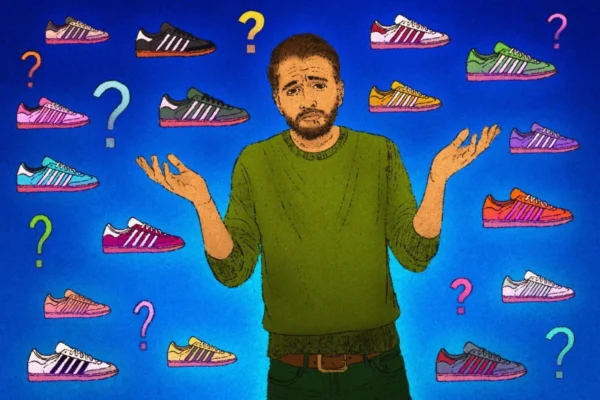
Daniel Willingham, a psychology professor and neuroscience researcher at the University of Virginia in the US, says the phenomenon occurs because the brain is designed to save people from having to think.
Problem-solving requires more energy than relying on memory, a fact that has roots in evolutionary survival mode, Willingham says. When faced with a goal, whether it be an immediate need – such as responding to a threat – or something longer-term like finding shelter, the mind first searches for what has worked before. The problem-solving part of the brain only kicks in afterwards.
“Another way to put it is that if you’re thinking, things are not going well,” he says.
That explains why sometimes people move through parts of their day on autopilot, he says. Throughout the day, people are confronted with hundreds of situations where they could do something different, but they almost always take the same route to work.
Schwartz says the proliferation of choices has also become tangled with identity in the social media age, where everyone can easily compare their choices to those of others.
“When all you’ve got to choose from is Lee’s and Levi’s, nobody expects the jeans they buy to fit perfectly,” he says. “When there are 2,000 options, well, now, dammit, you do expect your jeans to fit perfectly.”
How ‘satisficing’ can help
Journalist David Epstein says that after researching his book, Inside the Box: How Constraints Make Us Better, he began to shift away from his maximalist tendencies. Now, he limits his opportunities for making choices, such as when he bought 10 of the same well-fitting T-shirts in different colours.
He was following the example of Herbert Simon, a psychologist and 1978 Nobel laureate in economics, who had three sets of clothes and ate nearly the same thing every day. Simon introduced the term “satisficing”, a combination of satisfying and sufficing that means setting good-enough criteria for decisions and moving on.
Epstein sets satisficing rules for himself when shopping online by first focusing on the purpose of the purchase.
“When I find one that does that, I’m buying it, instead of reading all the reviews and getting sucked into, ‘Well, this one has all these other features.’”
Willingham and Schwartz suggest farming out some decisions. If you are looking for a new phone, find a friend who is happy with theirs and buy that one.
For larger decisions like financial planning, you will be happier if you rely on someone else’s professional expertise, Willingham says.
“If you’re thinking, ‘Well, I’m a clever guy, I can figure that out,’ I think nine times out of 10, you’re fooling yourself,” he says.
Schwartz acknowledges that for people who have trouble making decisions, changing is difficult. But it is worth it.
“What happens over time is you find it easier to make decisions, you end up more satisfied with the decisions you make, and all of a sudden, you’ve got an extra two hours in every day,” he says.